


Polyhedron
The
Sharing rebel ideas to care for our living planet
Magazine
Polyhedron
The
Sharing rebel ideas to care for our living planet
Magazine
Polyhedron
The
Sharing rebel ideas to care for our living planet
magazine
Polyhedron
magazine
The
Sharing rebel ideas to care for our living planet
Polyhedron
magazine
The
Sharing rebel ideas to care for our living planet

Polyhedron
The
magazine
Sharing rebel ideas to care for our living planet
First part of the title-TT Ramillas 16 pts
Section of the Magazine-TT Ramillas 24 pts
TT Ramillas-Main title
- TT Ramillas for the 3 key ideas: 21 pts, bold, bulleted
- It is always good to test the readability in mobile phones
- The font will always be black.
The main colour scheme of the magazine is inspired in earthly Amazon, indigenous colours, from bark brown, green leaf, to a sun faded pastel yellow. The contrasts are achieved by white and black. Templates do vary sets of colours, so we have to test how it all works!
Background 1
#FEFFE0
Background 2 #FFFFFF
Tags and other highlights #38510F
Heading 1 - TT Ramillas 27 pts
Body text of all articles: TT Ramillas 15 pts.
This font does have better legibility and is a modern transitional font between serif and non-serif. We have checked that it includes italics, bold, and is inclusive of compatibility with Latin characters, French, Spanish accents, etc. TT Ramillas will basically be used for all content in terms of text for reading. The other font, which will be Avenir will be used for all the descriptions of content.

This is a highlighted text- TT Ramillas 21 pts
Again it would be good to check if this is feasible for mobile phones.
Avenir
10 pts
Bold
Tags
White

First part of the title-TT Ramillas 16 pts
Section of the Magazine-TT Ramillas 24 pts
Meno Banner Main title
- TT Ramillas for the 3 key ideas: 21 pts, bold, bulleted
- It is always good to test the readability in mobile phones
- The font will always be black.
The main colour scheme of the magazine is inspired in earthly Amazon, indigenous colours, from bark brown, green leaf, to a sun faded pastel yellow. The contrasts are achieved by white and black. Templates do vary sets of colours, so we have to test how it all works!
Background 1
#FEFFE0
Background 2 #FFFFFF
Tags and other highlights #38510F
Heading 1 - TT Ramillas 27 pts
Body text of all articles: TT Ramillas 15 pts.
This font does have better legibility and is a modern transitional font between serif and non-serif. We have checked that it includes italics, bold, and is inclusive of compatibility with Latin characters, French, Spanish accents, etc. TT Ramillas will basically be used for all content in terms of text for reading. The other font, which will be Avenir will be used for all the descriptions of content.
This is a highlighted text- TT Ramillas 21 pts
Again it would be good to check if this is feasible for mobile phones.
Avenir
10 pts
Bold
Tags
White
Avenir: for content description (tags)
authors title: bold, in capitals, 12 pts
- Names of authors, Avenir Regular 12 points
- Bulleted
Publication date: Avenir 12pts Bold
Author title: bold in capitals, 10 pts
Author brief description of affiliation (10pts)

Tags
10pts
Avenir
Bold
Oceans
You might also like...Avenir 16pts bold
TAG AVENIR BOLD10Pt
Title Avenir 12pts
#452B13
#000000
#806451
#B47861
#B3AA99
#FDD593
#FEFFE0
#FFFFFF
#CAD400
#9BAD1D
#597810
#D51200
#00779F
Colour Palette of The Polyhedron Magazine
Based on the Earthly colourful palette of the Amazon biome







Article
Discerning the
Planetary Crisis
The Polyhedron
Article
Co-Writing ideas to care for our Common Home

Why Integral Ecology
Matters for our Planet
- Integral Ecology provides a set of lenses that allows us to see and journey together.
- Nothing is more encouraging than learning to see how all life is one.
- We learn how everything is connected and apply it to policies and practices across this Earth, our common home.
O
Published: 15th Nov 2023

authors
- Carmody Grey ,
- Angus Richie,
- Rachel Valbrun,
- Meriel Woodward
- Carlos Zepeda








reetu sogani
Assistant Director of Caritas Westminster, United Kingdom

meriel woodward
Assistant Director of Caritas Westminster, United Kingdom

angus ritchie
Assistant Director of Caritas Westminster, United Kingdom

oliver putz
Academic Researcher, Institute of Potsdam, Germany

Miguel pérez
Community activist
San Salvador, El Salvador
Travel restrictions saw numbers of endangered dolphins increase near Hong Kong. Jerome Favre/EPA
Can noise kill? The sound produced by a seismic airgun can cause permanent hearing loss, tissue damage and even death in nearby animals.

Can noise kill?
The sound produced by a seismic airgun can cause permanent hearing loss, tissue damage and even death in nearby animals.
Evidence for the lethal effects of noise can be hard to document in the open ocean. But seismic surveys have been linked to the mass mortality of squid and zooplankton. In 2017, research revealed that a single air gun caused the death rate of zooplankton to increase from 18% to 40–60% over a 1.2 kilometre stretch of the ocean off the coast of southern Tasmania.
The use of naval sonar has also been associated with the mass stranding of several whale species in the Caribbean, Europe and East Asia. Mass stranding events involve entire pods of animals simultaneously beaching themselves.

We believe knowledge should flow beyond boundaries like water and air.

Republish this article



Disclosure
Statement
The authors here. express....

Partner Organisations
Read more about the organisations linked to the authors
Travel restrictions saw numbers of endangered dolphins increase near Hong Kong. Jerome Favre/EPA

Travel restrictions saw numbers of endangered dolphins increase near Hong Kong. Jerome Favre/EPA

Observing the movements, feeding, communication, resting and social interactions of animals provides scientists with a method for exploring the effects of noise.
The behavioural impacts of noise on marine mammals are particularly well studied due to conservation concerns and their reliance on sound for communication, foraging and navigation. Many of these species move large distances and long-range communication is crucial for coordinating social interactions and reproduction.
But the sounds produced by large marine mammals are of a similar low frequency range to much of the noise produced by humans. The noise produced by ships tends to be below 2 kHz which overlaps with the vocal frequencies produced by many large mammals. Blue whales, for example, produce frequency vocalisations of less than 100 Hz meaning their calls can be lost in the background din.
Shipping noise has led to marine mammals altering their vocalisation patterns. This includes making calls longer and more repetitive or waiting until noise levels drop before calling. Research has shown that shipping noise made within 1,200 metres of humpback whales has caused the whales to either reduce or stop their calling in the waters surrounding the remote Ogasawara Islands in Japan.

Travel restrictions saw numbers of endangered dolphins increase near Hong Kong. Jerome Favre/EPA
The good news is that noise is removed from the environment as soon as the sound source is switched off.
Noisy oceans
Integral Ecology
Energy
Water
Oceans
You might also like...
The Liquid Planetary Crisis
toolkit
poem
The Liquid Planetary Crisis
story
ARTICLE
spirituality
music
The Liquid Planetary Crisis
The Liquid Planetary Crisis

The Liquid Planetary Crisis
The Liquid Planetary Crisis


Article
Discerning the
Planetary Crisis
The Polyhedron
Article
Co-Writing ideas to Care for our Common Home
Why Integral Ecology
Matters for our Planet
- Integral Ecology provides a set of lenses that allows us to see and journey together.
- Nothing is more encouraging than learning to see how all life is one.
- We learn how everything is connected and apply it to policies and practices across this Earth, our common home.

O
Published: 15th Nov 2023

authors
- Carmody Grey ,
- Angus Richie,
- Rachel Valbrun,
- Meriel Woodward
- Carlos Zepeda






reetu sogani
Assistant Director of Caritas Westminster, United Kingdom
meriel woodward
Assistant Director of Caritas Westminster, United Kingdom
angus ritchie
Assistant Director of Caritas Westminster, United Kingdom
oliver putz
Academic Researcher, Institute of Potsdam, Germany
Miguel pérez
Community activist
San Salvador, El Salvador
Travel restrictions saw numbers of endangered dolphins increase near Hong Kong. Jerome Favre/EPA
Can noise kill? The sound produced by a seismic airgun can cause permanent hearing loss, tissue damage and even death in nearby animals.
Can noise kill?
The sound produced by a seismic airgun can cause permanent hearing loss, tissue damage and even death in nearby animals.
Evidence for the lethal effects of noise can be hard to document in the open ocean. But seismic surveys have been linked to the mass mortality of squid and zooplankton. In 2017, research revealed that a single air gun caused the death rate of zooplankton to increase from 18% to 40–60% over a 1.2 kilometre stretch of the ocean off the coast of southern Tasmania.
The use of naval sonar has also been associated with the mass stranding of several whale species in the Caribbean, Europe and East Asia. Mass stranding events involve entire pods of animals simultaneously beaching themselves.
Travel restrictions saw numbers of endangered dolphins increase near Hong Kong. Jerome Favre/EPA

We believe knowledge should flow beyond boundaries like water and air.
Republish this article
Disclosure
Statement
The authors here. express....

Partner Organisations
Read more about the organisations linked to the authors
Travel restrictions saw numbers of endangered dolphins increase near Hong Kong. Jerome Favre/EPA
Observing the movements, feeding, communication, resting and social interactions of animals provides scientists with a method for exploring the effects of noise.
The behavioural impacts of noise on marine mammals are particularly well studied due to conservation concerns and their reliance on sound for communication, foraging and navigation. Many of these species move large distances and long-range communication is crucial for coordinating social interactions and reproduction.
But the sounds produced by large marine mammals are of a similar low frequency range to much of the noise produced by humans. The noise produced by ships tends to be below 2 kHz which overlaps with the vocal frequencies produced by many large mammals. Blue whales, for example, produce frequency vocalisations of less than 100 Hz meaning their calls can be lost in the background din.
Shipping noise has led to marine mammals altering their vocalisation patterns. This includes making calls longer and more repetitive or waiting until noise levels drop before calling. Research has shown that shipping noise made within 1,200 metres of humpback whales has caused the whales to either reduce or stop their calling in the waters surrounding the remote Ogasawara Islands in Japan.
Travel restrictions saw numbers of endangered dolphins increase near Hong Kong. Jerome Favre/EPA
The good news is that noise is removed from the environment as soon as the sound source is switched off.

Noisy oceans
Integral Ecology
Energy
Water
Oceans
You might also like...
The Liquid Planetary Crisis
toolkit
poem
The Liquid Planetary Crisis
story
ARTICLE
spirituality
music
The Liquid Planetary Crisis
The Liquid Planetary Crisis
The Liquid Planetary Crisis
The Liquid Planetary Crisis

The Polyhedron
Art Gallery
light prisms from people, nature and spirit




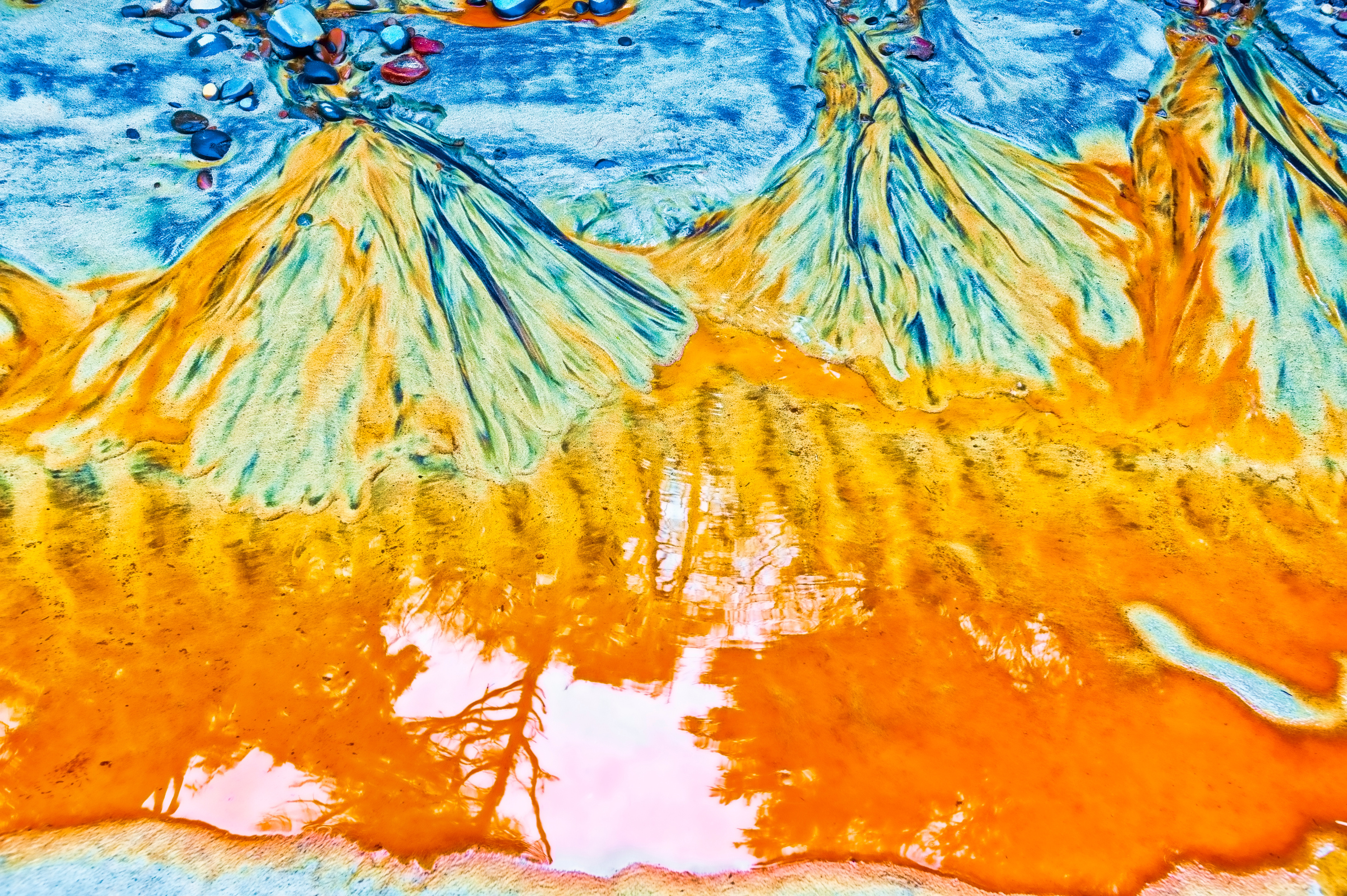

Street Eco-Art in Haiti
Travel restrictions saw numbers of endangered dolphins increase near Hong Kong. Jerome Favre/EPA


authors
by Carmody Grey , Angus Richie,
Rachel Valbrun, Meriel Woodward and Carlos Zepeda
Light in the Spirit






- Artistic expressions in Africa often depict connections between people, nature and the spirit. In this gallery we show the work of Maya Xihuatelac, Guatemalan artist known for her depictions of Mayan culture.

meriel woodward
Assistant Director of Caritas Westminster, United Kingdom

meriel woodward
Assistant Director of Caritas Westminster, United Kingdom
meriel woodward
Assistant Director of Caritas Westminster, United Kingdom
meriel woodward
Assistant Director of Caritas Westminster, United Kingdom
meriel woodward
Assistant Director of Caritas Westminster, United Kingdom
meriel woodward
Assistant Director of Caritas Westminster, United Kingdom
We believe knowledge should flow beyond boundaries like water and air.
Republish this article
Travel restrictions saw numbers of endangered dolphins increase near Hong Kong. Jerome Favre/EPA
N
Disclosure
Statement
The authors here. express....

Partner Organisations
Read more about the organisations linked to the authors
Read more about the organisations linked to the authors
Light and pain in the age of the Anthropocene

Travel restrictions saw numbers of endangered dolphins increase near Hong Kong. Jerome Favre/EPA
Faith Communities and Ecology
Travel restrictions saw numbers of endangered dolphins increase near Hong Kong. Jerome Favre/EPA

Noisy oceans
Integral Ecology
Energy
Water
Oceans
Noisy oceans Integral Ecology, Energy, Water, Forests, Land, Life, Oceans









building
Cultures of Encounter
The Polyhedron
Eco-Spirituality
Contemplation in action to change from within


How Contemplation in action Matters
- Integral Ecology provides a set of lenses that allows us to see and journey together.
- Nothing is more encouraging than learning to see how all life is one.
- We learn how everything is connected and apply it to policies and practices across this Earth, our common home.
O

authors
- Carmody Grey ,
- Angus Richie,
- Rachel Valbrun,
- Meriel Woodward
- Carlos Zepeda







reetu sogani
Assistant Director of Caritas Westminster, United Kingdom
meriel woodward
Assistant Director of Caritas Westminster, United Kingdom
angus ritchie
Assistant Director of Caritas Westminster, United Kingdom
oliver putz
Academic Researcher, Institute of Potsdam, Germany
meriel woodward
Assistant Director of Caritas Westminster, United Kingdom
Travel restrictions saw numbers of endangered dolphins increase near Hong Kong. Jerome Favre/EPA
Can noise kill? The sound produced by a seismic airgun can cause permanent hearing loss, tissue damage and even death in nearby animals.
Can noise kill?
The sound produced by a seismic airgun can cause permanent hearing loss, tissue damage and even death in nearby animals.
Evidence for the lethal effects of noise can be hard to document in the open ocean. But seismic surveys have been linked to the mass mortality of squid and zooplankton. In 2017, research revealed that a single air gun caused the death rate of zooplankton to increase from 18% to 40–60% over a 1.2 kilometre stretch of the ocean off the coast of southern Tasmania.
The use of naval sonar has also been associated with the mass stranding of several whale species in the Caribbean, Europe and East Asia. Mass stranding events involve entire pods of animals simultaneously beaching themselves.

Travel restrictions saw numbers of endangered dolphins increase near Hong Kong. Jerome Favre/EPA

We believe knowledge should flow beyond boundaries like water and air.
Republish this article

Disclosure
Statement
The authors here. express....

Partner Organisations
Read more about the organisations linked to the authors



Travel restrictions saw numbers of endangered dolphins increase near Hong Kong. Jerome Favre/EPA





Observing the movements, feeding, communication, resting and social interactions of animals provides scientists with a method for exploring the effects of noise.
The behavioural impacts of noise on marine mammals are particularly well studied due to conservation concerns and their reliance on sound for communication, foraging and navigation. Many of these species move large distances and long-range communication is crucial for coordinating social interactions and reproduction.
But the sounds produced by large marine mammals are of a similar low frequency range to much of the noise produced by humans. The noise produced by ships tends to be below 2 kHz which overlaps with the vocal frequencies produced by many large mammals. Blue whales, for example, produce frequency vocalisations of less than 100 Hz meaning their calls can be lost in the background din.
Shipping noise has led to marine mammals altering their vocalisation patterns. This includes making calls longer and more repetitive or waiting until noise levels drop before calling. Research has shown that shipping noise made within 1,200 metres of humpback whales has caused the whales to either reduce or stop their calling in the waters surrounding the remote Ogasawara Islands in Japan.
Despite these vocal adaptations, noise can negatively affect animals’ feeding behaviour and increase physiological stress. Research found that a reduction in shipping following the 9/11 terrorist attacks led to a six decibel drop in noise levels in the Bay of Fundy on Canada’s Atlantic coast. This coincided with lower levels of physiological stress detected in North Atlantic right whales when researchers measured stress hormones from floating whale faeces.

Travel restrictions saw numbers of endangered dolphins increase near Hong Kong. Jerome Favre/EPA
The good news is that noise is removed from the environment as soon as the sound source is switched off.

Noisy oceans
Integral Ecology
Energy
Water
Oceans

You might also like...
The Liquid Planetary Crisis
toolkit
poem
The Liquid Planetary Crisis
story
ARTICLE
spirituality
music
The Liquid Planetary Crisis
The Liquid Planetary Crisis

The Liquid Planetary Crisis
The Liquid Planetary Crisis




The Polyhedron
Poems
meaningful ideas from people, nature and spirit
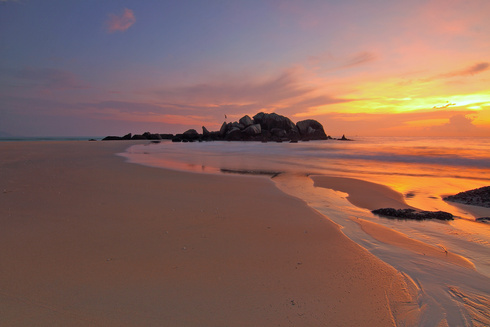







Seeds
By Lucy in the Sky
That floats on high o'er vales and hills,
When all at once I saw a crowd,
Beside the lake, beneath the trees,
Fluttering and dancing in the breeze.
Continuous as the stars that shine
They stretched in never-ending line
Ten thousand saw I at a glance,
Tossing their heads in sprightly dance.
The waves beside them danced; but they
Out-did the sparkling waves in glee:
I gazed—and gazed—but little thought
What wealth the show to me had brought:
For oft, when on my couch I lie
They flash upon that inward eye
Which is the bliss of solitude;
And then my heart with pleasure fills,
And dances with the daffodils.

meriel woodward
Assistant Director of Caritas Westminster, United Kingdom

We believe knowledge should flow beyond boundaries like water and air.
Republish this article
Disclosure
Statement
The authors here. express....

Partner Organisations
Read more about the organisations linked to the authors

Light in the Spirit
Artistic expressions in Latin America often depict connections between people, nature and the spirit. In this gallery we show the work of Maya Xihuatelac, Guatemalan artist known for her depictions of Mayan culture.

Travel restrictions saw numbers of endangered dolphins increase near Hong Kong. Jerome Favre/EPA
I
Causeway
Beneath the rain-shadow and washed farmhouses,
in the service of the old shore,
we waited for the rising of the road,
the south lane laden in sand,
the north in residue and wrack;
the tide drawing off the asphalt
leaving our tyres little to disperse;
still, the water under wheel was forceful –
cleft between the chassis and the sea –
that clean division that the heart rages for.
But half way out the destination ceases to be the prize,
and what matters is the sudden breadth of vision:
to the north, a hovering headland,
to the south, a shoal of light –
the sea off-guarded, but hunting:
our licence brief, unlikely to be renewed.
Between mainland and island, in neither sway,
a nodding of the needle as the compass takes its weigh.
BY WILLIAM WORDSWORTH
Launch Audio in a New Window
Travel restrictions saw numbers of endangered dolphins increase near Hong Kong. Jerome Favre/EPA
II
The Gaze of Xuc
Beneath the rain-shadow and washed farmhouses,
in the service of the old shore,
we waited for the rising of the road,
the south lane laden in sand,
the north in residue and wrack;
the tide drawing off the asphalt
leaving our tyres little to disperse;
still, the water under wheel was forceful –
cleft between the chassis and the sea –
that clean division that the heart rages for.
But half way out the destination ceases to be the prize,
and what matters is the sudden breadth of vision:
to the north, a hovering headland,
to the south, a shoal of light –
the sea off-guarded, but hunting:
our licence brief, unlikely to be renewed.
Between mainland and island, in neither sway,
a nodding of the needle as the compass takes its weigh.
Travel restrictions saw numbers of endangered dolphins increase near Hong Kong. Jerome Favre/EPA
Noisy oceans
Integral Ecology
Energy
Water
Oceans
Noisy oceans Integral Ecology, Energy, Water, Forests, Land, Life, Oceans



Toolkits
To care for our common home

Noisy oceans
Integral Ecology
Energy
Water
Oceans




Integral Ecology in practice
Complexity
Intractable Problem from Reality
n...
Social and Ecological Injustice

n... dimensions or Levels of reality
Spiritual, ethical, theological dimensions
B
A
Beyond the disciplines
Transdisciplinary knowledge
No disciplinary boundaries, epistemic diversity
Disciplines, practices
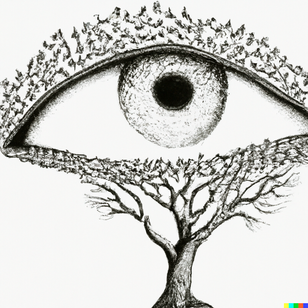

- What is it?
Integral Ecology provides a set of lenses that allows us to see and journey together. Lorem ipsum dolor sit amet, consectetur adipiscing elit.
We learn how everything is connected and apply it to policies and practices across this Earth, our common home. It is in so doing that we start understanding how trandisciplinarity as a concept, as an idea, and as practice all interconnect in one single practice.
Lorem ipsum dolor sit amet, consectetur adipiscing elit. Proin metus mi, semper ut varius eu, mattis nec leo. Nulla non leo suscipit, hendrerit enim condimentum, porta urna. Fusce bibendum turpis eu ex fringilla, ac elementum nulla pharetra.
Lorem ipsum dolor sit amet, consectetur adipiscing elit. Proin metus mi, semper ut varius eu, mattis nec leo. Nulla non leo suscipit, hendrerit enim condimentum, porta urna. Fusce bibendum turpis eu ex fringilla, ac elementum nulla pharetra.

Applied Examples

Travel restrictions saw numbers of endangered dolphins increase near Hong Kong. Jerome Favre/EPA
O
Can noise kill? The sound produced by a seismic airgun can cause permanent hearing loss, tissue damage and even death in nearby animals.

Travel restrictions saw numbers of endangered dolphins increase near Hong Kong. Jerome Favre/EPA
Observing the movements, feeding, communication, resting and social interactions of animals provides scientists with a method for exploring the effects of noise.
The behavioural impacts of noise on marine mammals are particularly well studied due to conservation concerns and their reliance on sound for communication, foraging and navigation. Many of these species move large distances and long-range communication is crucial for coordinating social interactions and reproduction.
But the sounds produced by large marine mammals are of a similar low frequency range to much of the noise produced by humans. The noise produced by ships tends to be below 2 kHz which overlaps with the vocal frequencies produced by many large mammals. Blue whales, for example, produce frequency vocalisations of less than 100 Hz meaning their calls can be lost in the background din.
Shipping noise has led to marine mammals altering their vocalisation patterns. This includes making calls longer and more repetitive or waiting until noise levels drop before calling. Research has shown that shipping noise made within 1,200 metres of humpback whales has caused the whales to either reduce or stop their calling in the waters surrounding the remote Ogasawara Islands in Japan.

Travel restrictions saw numbers of endangered dolphins increase near Hong Kong. Jerome Favre/EPA
The good news is that noise is removed from the environment as soon as the sound source is switched off or turned down.
Integral Ecology Poster




- What is it?
- Who is it for?
- How long does it take?
- What is the format
- What materials do you need
- What does the facilitator need to know
- Links
- Applied Examples
- Feedback


authors
meriel woodward
Assistant Director of Caritas Westminster, United Kingdom

meriel woodward
Assistant Director of Caritas Westminster, United Kingdom

meriel woodward
Assistant Director of Caritas Westminster, United Kingdom
meriel woodward
Assistant Director of Caritas Westminster, United Kingdom
meriel woodward
Assistant Director of Caritas Westminster, United Kingdom

We believe knowledge should flow beyond boundaries like water and air.
Republish this article
meriel woodward
Assistant Director of Caritas Westminster, United Kingdom
- Carmody Grey ,
- Angus Richie,
- Rachel Valbrun,
- Meriel Woodward
- Carlos Zepeda

Disclosure
Statement
The authors here. express....
Partner Organisations
Read more about the organisations linked to the authors






The Polyhedron
Photo Gallery
light prisms from people, nature and spirit


authors
Travel restrictions saw numbers of endangered dolphins increase near Hong Kong. Jerome Favre/EPA
The Cry of PachaMama
by Carmody Grey , Angus Richie,
Rachel Valbrun, Meriel Woodward and Carlos Zepeda
Light in the Spirit
- Artistic expressions in Africa often depict connections between people, nature and the spirit. In this gallery we show the work of Maya Xihuatelac, Guatemalan artist known for her depictions of Mayan culture.
meriel woodward
Assistant Director of Caritas Westminster, United Kingdom
meriel woodward
Assistant Director of Caritas Westminster, United Kingdom
meriel woodward
Assistant Director of Caritas Westminster, United Kingdom
meriel woodward
Assistant Director of Caritas Westminster, United Kingdom
meriel woodward
Assistant Director of Caritas Westminster, United Kingdom
meriel woodward
Assistant Director of Caritas Westminster, United Kingdom
We believe knowledge should flow beyond boundaries like water and air.
Republish this article
Travel restrictions saw numbers of endangered dolphins increase near Hong Kong. Jerome Favre/EPA
N

Disclosure
Statement
The authors here. express....
Partner Organisations
Read more about the organisations linked to the authors
Light and pain in the age of the Anthropocene
Travel restrictions saw numbers of endangered dolphins increase near Hong Kong. Jerome Favre/EPA
Faith Communities and Ecology
Travel restrictions saw numbers of endangered dolphins increase near Hong Kong. Jerome Favre/EPA
Noisy oceans
Integral Ecology
Energy
Water
Oceans
Noisy oceans Integral Ecology, Energy, Water, Forests, Land, Life, Oceans



The Polyhedron
Music
sounds from people, nature and spirit

Music from the Amazon
- Integral Ecology provides a set of lenses that allows us to see and journey together.
- We learn how everything is connected and apply it to policies and practices across this Earth, our common home.

authors
by Carmody Grey , Angus Richie,
Rachel Valbrun, Meriel Woodward and Carlos Zepeda








Travel restrictions saw numbers of endangered dolphins increase near Hong Kong. Jerome Favre/EPA
N


Travel restrictions saw numbers of endangered dolphins increase near Hong Kong. Jerome Favre/EPA
meriel woodward
Assistant Director of Caritas Westminster, United Kingdom
meriel woodward
Assistant Director of Caritas Westminster, United Kingdom
meriel woodward
Assistant Director of Caritas Westminster, United Kingdom
meriel woodward
Assistant Director of Caritas Westminster, United Kingdom
meriel woodward
Assistant Director of Caritas Westminster, United Kingdom
meriel woodward
Assistant Director of Caritas Westminster, United Kingdom

We believe knowledge should flow beyond boundaries like water and air.

Republish this article

Disclosure
Statement
The authors here. express....
Partner Organisations
Read more about the organisations linked to the authors
Music Flows from the Heart
Travel restrictions saw numbers of endangered dolphins increase near Hong Kong. Jerome Favre/EPA
Music is invisible like the soul

Travel restrictions saw numbers of endangered dolphins increase near Hong Kong. Jerome Favre/EPA

Beats to change the world
Noisy oceans
Integral Ecology
Energy
Water
Oceans
Discerning the
Planetary Crisis

The Polyhedron
Article
Co-Writing ideas to care for our Common Home

Why Integral Ecology
Matters for our Planet
- Integral Ecology provides a set of lenses that allows us to see and journey together.
- Nothing is more encouraging than learning to see how all life is one.
- We learn how everything is connected and apply it to policies and practices across this Earth, our common home.
O

authors
- Carmody Grey ,
- Angus Richie,
- Rachel Valbrun,
- Meriel Woodward
- Carlos Zepeda
reetu sogani
Assistant Director of Caritas Westminster, United Kingdom
meriel woodward
Assistant Director of Caritas Westminster, United Kingdom
angus ritchie
Assistant Director of Caritas Westminster, United Kingdom
oliver putz
Academic Researcher, Institute of Potsdam, Germany
meriel woodward
Assistant Director of Caritas Westminster, United Kingdom
Travel restrictions saw numbers of endangered dolphins increase near Hong Kong. Jerome Favre/EPA
Can noise kill? The sound produced by a seismic airgun can cause permanent hearing loss, tissue damage and even death in nearby animals.
Can noise kill?
The sound produced by a seismic airgun can cause permanent hearing loss, tissue damage and even death in nearby animals.
Evidence for the lethal effects of noise can be hard to document in the open ocean. But seismic surveys have been linked to the mass mortality of squid and zooplankton. In 2017, research revealed that a single air gun caused the death rate of zooplankton to increase from 18% to 40–60% over a 1.2 kilometre stretch of the ocean off the coast of southern Tasmania.
The use of naval sonar has also been associated with the mass stranding of several whale species in the Caribbean, Europe and East Asia. Mass stranding events involve entire pods of animals simultaneously beaching themselves.
Travel restrictions saw numbers of endangered dolphins increase near Hong Kong. Jerome Favre/EPA
We believe knowledge should flow beyond boundaries like water and air.
Republish this article
Disclosure
Statement
The authors here. express....
Partner Organisations
Read more about the organisations linked to the authors
Travel restrictions saw numbers of endangered dolphins increase near Hong Kong. Jerome Favre/EPA
Observing the movements, feeding, communication, resting and social interactions of animals provides scientists with a method for exploring the effects of noise.
The behavioural impacts of noise on marine mammals are particularly well studied due to conservation concerns and their reliance on sound for communication, foraging and navigation. Many of these species move large distances and long-range communication is crucial for coordinating social interactions and reproduction.
But the sounds produced by large marine mammals are of a similar low frequency range to much of the noise produced by humans. The noise produced by ships tends to be below 2 kHz which overlaps with the vocal frequencies produced by many large mammals. Blue whales, for example, produce frequency vocalisations of less than 100 Hz meaning their calls can be lost in the background din.
Shipping noise has led to marine mammals altering their vocalisation patterns. This includes making calls longer and more repetitive or waiting until noise levels drop before calling. Research has shown that shipping noise made within 1,200 metres of humpback whales has caused the whales to either reduce or stop their calling in the waters surrounding the remote Ogasawara Islands in Japan.
Despite these vocal adaptations, noise can negatively affect animals’ feeding behaviour and increase physiological stress. Research found that a reduction in shipping following the 9/11 terrorist attacks led to a six decibel drop in noise levels in the Bay of Fundy on Canada’s Atlantic coast. This coincided with lower levels of physiological stress detected in North Atlantic right whales when researchers measured stress hormones from floating whale faeces.
Travel restrictions saw numbers of endangered dolphins increase near Hong Kong. Jerome Favre/EPA

The good news is that noise is removed from the environment as soon as the sound source is switched off.
Noisy oceans
Integral Ecology
Energy
Water
Oceans

You might also like...
toolkit
poem
story
ARTICLE
spirituality
music
The Liquid Planetary Crisis
The Liquid Planetary Crisis
The Liquid Planetary Crisis
The Liquid Planetary Crisis

The Liquid Planetary Crisis
The Liquid Planetary Crisis

Journeying to
Radical Solutions
The Polyhedron
Article
Co-Writing ideas to care for our Common Home

Why Integral Ecology
Matters for our Planet
- Integral Ecology provides a set of lenses that allows us to see and journey together.
- Nothing is more encouraging than learning to see how all life is one.
- We learn how everything is connected and apply it to policies and practices across this Earth, our common home.
O
authors
- Carmody Grey ,
- Angus Richie,
- Rachel Valbrun,
- Meriel Woodward
- Carlos Zepeda
reetu sogani
Assistant Director of Caritas Westminster, United Kingdom
meriel woodward
Assistant Director of Caritas Westminster, United Kingdom
angus ritchie
Assistant Director of Caritas Westminster, United Kingdom
oliver putz
Academic Researcher, Institute of Potsdam, Germany
meriel woodward
Assistant Director of Caritas Westminster, United Kingdom
Travel restrictions saw numbers of endangered dolphins increase near Hong Kong. Jerome Favre/EPA
Can noise kill? The sound produced by a seismic airgun can cause permanent hearing loss, tissue damage and even death in nearby animals.
Can noise kill?
The sound produced by a seismic airgun can cause permanent hearing loss, tissue damage and even death in nearby animals.
Evidence for the lethal effects of noise can be hard to document in the open ocean. But seismic surveys have been linked to the mass mortality of squid and zooplankton. In 2017, research revealed that a single air gun caused the death rate of zooplankton to increase from 18% to 40–60% over a 1.2 kilometre stretch of the ocean off the coast of southern Tasmania.
The use of naval sonar has also been associated with the mass stranding of several whale species in the Caribbean, Europe and East Asia. Mass stranding events involve entire pods of animals simultaneously beaching themselves.
Travel restrictions saw numbers of endangered dolphins increase near Hong Kong. Jerome Favre/EPA
We believe knowledge should flow beyond boundaries like water and air.
Republish this article
Disclosure
Statement
The authors here. express....
Partner Organisations
Read more about the organisations linked to the authors
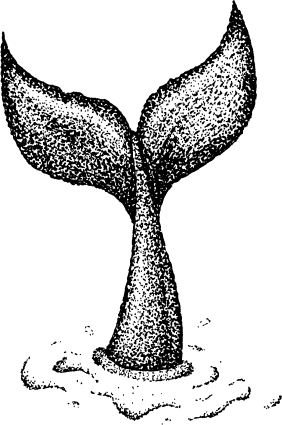


Observing the movements, feeding, communication, resting and social interactions of animals provides scientists with a method for exploring the effects of noise.
The behavioural impacts of noise on marine mammals are particularly well studied due to conservation concerns and their reliance on sound for communication, foraging and navigation. Many of these species move large distances and long-range communication is crucial for coordinating social interactions and reproduction.
But the sounds produced by large marine mammals are of a similar low frequency range to much of the noise produced by humans. The noise produced by ships tends to be below 2 kHz which overlaps with the vocal frequencies produced by many large mammals. Blue whales, for example, produce frequency vocalisations of less than 100 Hz meaning their calls can be lost in the background din.
Shipping noise has led to marine mammals altering their vocalisation patterns. This includes making calls longer and more repetitive or waiting until noise levels drop before calling. Research has shown that shipping noise made within 1,200 metres of humpback whales has caused the whales to either reduce or stop their calling in the waters surrounding the remote Ogasawara Islands in Japan.
Despite these vocal adaptations, noise can negatively affect animals’ feeding behaviour and increase physiological stress. Research found that a reduction in shipping following the 9/11 terrorist attacks led to a six decibel drop in noise levels in the Bay of Fundy on Canada’s Atlantic coast. This coincided with lower levels of physiological stress detected in North Atlantic right whales when researchers measured stress hormones from floating whale faeces.
Travel restrictions saw numbers of endangered dolphins increase near Hong Kong. Jerome Favre/EPA
The good news is that noise is removed from the environment as soon as the sound source is switched off.
Noisy oceans
Integral Ecology
Energy
Water
Oceans
You might also like...
toolkit
poem
story
The Liquid Planetary Crisis
ARTICLE
spirituality
music
The Liquid Planetary Crisis
The Liquid Planetary Crisis
The Liquid Planetary Crisis
The Liquid Planetary Crisis
The Liquid Planetary Crisis
Hopeful Futures
Envisioning

The Polyhedron
Article
Co-Writing ideas to care for our Common Home
Why Integral Ecology
Matters for our Planet
- Integral Ecology provides a set of lenses that allows us to see and journey together.
- Nothing is more encouraging than learning to see how all life is one.
- We learn how everything is connected and apply it to policies and practices across this Earth, our common home.
O
authors
- Carmody Grey ,
- Angus Richie,
- Rachel Valbrun,
- Meriel Woodward
- Carlos Zepeda
reetu sogani
Assistant Director of Caritas Westminster, United Kingdom
meriel woodward
Assistant Director of Caritas Westminster, United Kingdom
angus ritchie
Assistant Director of Caritas Westminster, United Kingdom
oliver putz
Academic Researcher, Institute of Potsdam, Germany
meriel woodward
Assistant Director of Caritas Westminster, United Kingdom
Travel restrictions saw numbers of endangered dolphins increase near Hong Kong. Jerome Favre/EPA
Can noise kill? The sound produced by a seismic airgun can cause permanent hearing loss, tissue damage and even death in nearby animals.
Can noise kill?
The sound produced by a seismic airgun can cause permanent hearing loss, tissue damage and even death in nearby animals.
Evidence for the lethal effects of noise can be hard to document in the open ocean. But seismic surveys have been linked to the mass mortality of squid and zooplankton. In 2017, research revealed that a single air gun caused the death rate of zooplankton to increase from 18% to 40–60% over a 1.2 kilometre stretch of the ocean off the coast of southern Tasmania.
The use of naval sonar has also been associated with the mass stranding of several whale species in the Caribbean, Europe and East Asia. Mass stranding events involve entire pods of animals simultaneously beaching themselves.
Travel restrictions saw numbers of endangered dolphins increase near Hong Kong. Jerome Favre/EPA
We believe knowledge should flow beyond boundaries like water and air.
Republish this article
Disclosure
Statement
The authors here. express....
Partner Organisations
Read more about the organisations linked to the authors
Travel restrictions saw numbers of endangered dolphins increase near Hong Kong. Jerome Favre/EPA

Observing the movements, feeding, communication, resting and social interactions of animals provides scientists with a method for exploring the effects of noise.
The behavioural impacts of noise on marine mammals are particularly well studied due to conservation concerns and their reliance on sound for communication, foraging and navigation. Many of these species move large distances and long-range communication is crucial for coordinating social interactions and reproduction.
But the sounds produced by large marine mammals are of a similar low frequency range to much of the noise produced by humans. The noise produced by ships tends to be below 2 kHz which overlaps with the vocal frequencies produced by many large mammals. Blue whales, for example, produce frequency vocalisations of less than 100 Hz meaning their calls can be lost in the background din.
Shipping noise has led to marine mammals altering their vocalisation patterns. This includes making calls longer and more repetitive or waiting until noise levels drop before calling. Research has shown that shipping noise made within 1,200 metres of humpback whales has caused the whales to either reduce or stop their calling in the waters surrounding the remote Ogasawara Islands in Japan.
Despite these vocal adaptations, noise can negatively affect animals’ feeding behaviour and increase physiological stress. Research found that a reduction in shipping following the 9/11 terrorist attacks led to a six decibel drop in noise levels in the Bay of Fundy on Canada’s Atlantic coast. This coincided with lower levels of physiological stress detected in North Atlantic right whales when researchers measured stress hormones from floating whale faeces.
Travel restrictions saw numbers of endangered dolphins increase near Hong Kong. Jerome Favre/EPA
The good news is that noise is removed from the environment as soon as the sound source is switched off.
Noisy oceans
Integral Ecology
Energy
Water
Oceans
You might also like...
toolkit
poem
story
The Liquid Planetary Crisis
ARTICLE
spirituality
music
The Liquid Planetary Crisis
The Liquid Planetary Crisis
The Liquid Planetary Crisis
The Liquid Planetary Crisis
The Liquid Planetary Crisis

Building
Cultures of Encounter
The Polyhedron
Article
Co-Writing ideas to care for our Common Home

Why Integral Ecology
Matters for our Planet
- Integral Ecology provides a set of lenses that allows us to see and journey together.
- Nothing is more encouraging than learning to see how all life is one.
- We learn how everything is connected and apply it to policies and practices across this Earth, our common home.
O
authors
- Carmody Grey ,
- Angus Richie,
- Rachel Valbrun,
- Meriel Woodward
- Carlos Zepeda
reetu sogani
Assistant Director of Caritas Westminster, United Kingdom
meriel woodward
Assistant Director of Caritas Westminster, United Kingdom
angus ritchie
Assistant Director of Caritas Westminster, United Kingdom
oliver putz
Academic Researcher, Institute of Potsdam, Germany
meriel woodward
Assistant Director of Caritas Westminster, United Kingdom
Travel restrictions saw numbers of endangered dolphins increase near Hong Kong. Jerome Favre/EPA
Can noise kill? The sound produced by a seismic airgun can cause permanent hearing loss, tissue damage and even death in nearby animals.
Can noise kill?
The sound produced by a seismic airgun can cause permanent hearing loss, tissue damage and even death in nearby animals.
Evidence for the lethal effects of noise can be hard to document in the open ocean. But seismic surveys have been linked to the mass mortality of squid and zooplankton. In 2017, research revealed that a single air gun caused the death rate of zooplankton to increase from 18% to 40–60% over a 1.2 kilometre stretch of the ocean off the coast of southern Tasmania.
The use of naval sonar has also been associated with the mass stranding of several whale species in the Caribbean, Europe and East Asia. Mass stranding events involve entire pods of animals simultaneously beaching themselves.
Travel restrictions saw numbers of endangered dolphins increase near Hong Kong. Jerome Favre/EPA
We believe knowledge should flow beyond boundaries like water and air.
Republish this article
Disclosure
Statement
The authors here. express....
Partner Organisations
Read more about the organisations linked to the authors



Travel restrictions saw numbers of endangered dolphins increase near Hong Kong. Jerome Favre/EPA



Observing the movements, feeding, communication, resting and social interactions of animals provides scientists with a method for exploring the effects of noise.
The behavioural impacts of noise on marine mammals are particularly well studied due to conservation concerns and their reliance on sound for communication, foraging and navigation. Many of these species move large distances and long-range communication is crucial for coordinating social interactions and reproduction.
But the sounds produced by large marine mammals are of a similar low frequency range to much of the noise produced by humans. The noise produced by ships tends to be below 2 kHz which overlaps with the vocal frequencies produced by many large mammals. Blue whales, for example, produce frequency vocalisations of less than 100 Hz meaning their calls can be lost in the background din.
Shipping noise has led to marine mammals altering their vocalisation patterns. This includes making calls longer and more repetitive or waiting until noise levels drop before calling. Research has shown that shipping noise made within 1,200 metres of humpback whales has caused the whales to either reduce or stop their calling in the waters surrounding the remote Ogasawara Islands in Japan.
Despite these vocal adaptations, noise can negatively affect animals’ feeding behaviour and increase physiological stress. Research found that a reduction in shipping following the 9/11 terrorist attacks led to a six decibel drop in noise levels in the Bay of Fundy on Canada’s Atlantic coast. This coincided with lower levels of physiological stress detected in North Atlantic right whales when researchers measured stress hormones from floating whale faeces.
Travel restrictions saw numbers of endangered dolphins increase near Hong Kong. Jerome Favre/EPA
The good news is that noise is removed from the environment as soon as the sound source is switched off.
Noisy oceans
Integral Ecology
Energy
Water
Oceans
You might also like...
toolkit
poem
story
The Liquid Planetary Crisis
ARTICLE
spirituality
music
The Liquid Planetary Crisis
The Liquid Planetary Crisis
The Liquid Planetary Crisis
The Liquid Planetary Crisis
The Liquid Planetary Crisis